
Baked to (im)perfection.
By Victoria Nikitaras

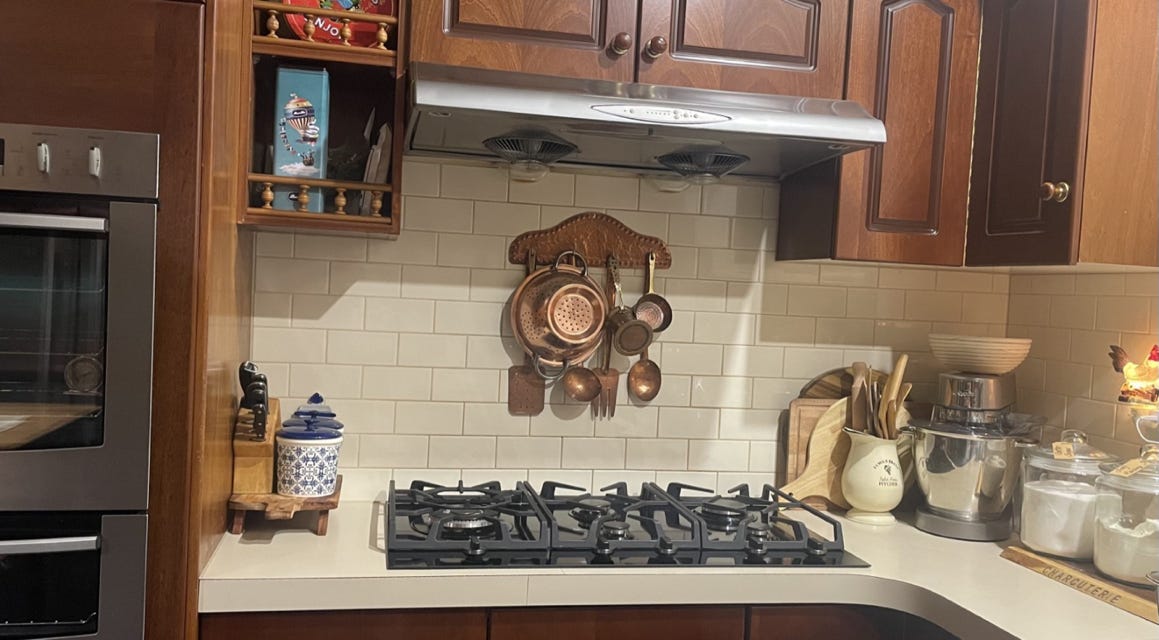
Exuding warmth that pulses through corridors like blood through arteries, the kitchen is considered the heart of the home, perfusing rooms with simple affection. Woven carefully into my DNA by my Greek ancestors, the importance of food lives within me- the interplay of love, family, culture, and tradition.
As a second-generation Greek-Australian, I've always had this internal battle of who I really am and where I truly belong. Food and baking have connected me to my culture through traditional recipes and through learning ancient techniques and artforms. My grandma taught me how to make hand pulled Filo pastry that she learnt when she was a child, this simple thing allowed me to connect to my culture and to uncover parts of my identity. How I blend the 2 cultures that I identify most with into one is through my baking. To me, this is how I foster a sense of belonging. Brene Brown talks about belonging as self-acceptance authenticity, and the courage to be vulnerable, and although this has been a complicated journey for me, the simple task of baking has guided me along the way.
As a child, I spent hours perched on worn countertops watching my mother move gracefully throughout the kitchen, her hands creating edible art. I begged to crack eggs, cut cookies, and lick the spoon. Baking became a pastime that connected us to each other. I remember my 6-year-old self. Finally allowed to use the oven for the first time, I enthusiastically made the world’s driest chocolate chip muffins, but I didn’t care that they weren’t perfect- they were perfectly my own.
Baking was magic to me- the oven was the catalyst that transformed batters into cakes and doughs into breads. The kitchen was a stage in the theatre of our home, a place of self-expression, creativity, freedom, and fun. A place where I felt like I truly belonged.
Despite owning children’s cookbooks, I challenged myself to recipes by Donna Hay or Nigella. My fascination was with the way in which combining basic ingredients created something distinctly personal - a product of the symphony of my time, hands, patience, and imagination.
As I matured, my childhood joy for baking gradually faded into the background, overshadowed by the demands of adulthood. In my early twenties, I stumbled upon a rediscovery of the joy in baking, recognising its significance in shaping my identity and well-being. I once again noticed that there is something incredibly transformative about the feeling of supple dough on your hands, the smell of chocolate cake baking in the oven, and the sound of bubbling caramel on the stove, that provide opportunities for moments of sheer presence, mindfulness, and joy. When life seemed incontrollable, meticulously measuring ingredients created a sense of control. Playing with new ingredients and recipes fostered creativity. Very quickly, I became addicted to the nostalgia and escapism of it all. It provided me with a sense of belonging that transcended the pursuit of approval or conformity. I shared my pastime with friends and family, baked goods becoming a silent language, a way to say, ‘I’m sorry,’ ‘I have been thinking of you’ and ‘I love you,’ when I could not find the words to speak. The therapeutic nature of baking holding my hand through life’s difficulties, engaged the senses, challenging the mind, and offering a grounding sense of peace.
The mechanical acts of baking offer a wholesome distraction from the ‘feelings,’ an immersion in another world for a period of time, and that’s when it has the greatest positive effect on my well-being. As Mary Reilly famously said, “Man, through the use of his hands, as they are energized by mind and will, can influence the state of his own health” (Reilly, 1962).
It’s when baking becomes a meditative practice that it brings a sense of well-being or well-doing to my life. I'm very much in my zone, and I'm creating something that doesn't really have expectation tied to it. There's no emotion tied to it. There's no pressure tied to it. It's just something I'm making for myself.
There’s this sense of peace and I can just switch off from anything else that's going on and be immersed in the activity.
In my early twenties, I underwent a time of self-discovery, marked by persistent questions around my identity and purpose. I was stuck. I worked a job where I loved the people in the office more than the work itself. I saw no future there, but also couldn’t see a future anywhere else. There was a void inside me, the emptiness following me for months. Seeking solace, I turned to baking, my mind wandering through daydreams of owning my own bakery, in the pursuit of happiness. I made the decision to share my baking with the big, wide world, creating a source of income- a ‘side hustle’ from my beloved hobby. From my cosy home-kitchen, colourful cakes and cookies emerged, finding their way into the homes and hearts of strangers. I felt like my life had meaning again- baked goods connecting me to others, being a part of their story- their child’s birthday, their wedding day. The novelty of it was a rich source of adrenaline, and the joy derived from satisfying people with my creations was palpable. I rolled cookies until the small hours of the morning and iced cakes until my hands cramped.
However, amidst the bliss of baking, I began to confront a darker reality: the insidious grip of perfectionism creeping into my passion, clouding the once-clear joy with questions of adequacy and self-worth.
It is considered that a living a life of meaning makes us well, and that finding meaning and purpose is key to making us happy. But is there a time when the things that we love, that give us purpose and meaning can make us perpetually unhappy?
As a fulltime employee and part time baker, my façade painted the picture of a ‘hardworking’ and ‘successful’ young woman. Yet, there existed a side shielded by the curated lens of Instagram posts and a smiling face at market stalls. A fun and exciting ‘side gig’ became a breeding ground for exhaustion and perfectionism. I was no longer baking for joy; I was baking to please others. Baking was no longer a source of calm and escapism; it was a breeding ground for anxiety. I was then plagued by the questions of ‘is it good enough?’ which quickly became ‘am I good enough?’. I grew frustrated within myself, and I once again lost myself, this time in a haze of burnout, comparison, and perfectionism- the thief of joy. On the outside, I appeared to be ‘hardworking’ and ‘busy’ and objectively, successful at what I was doing. But there was a side to this that people didn’t see on social media.
“Perfectionism is not a quest for the best. It is a pursuit of the worst in ourselves, the part that tells us that nothing we do will ever be good enough.”
― Julia Cameron
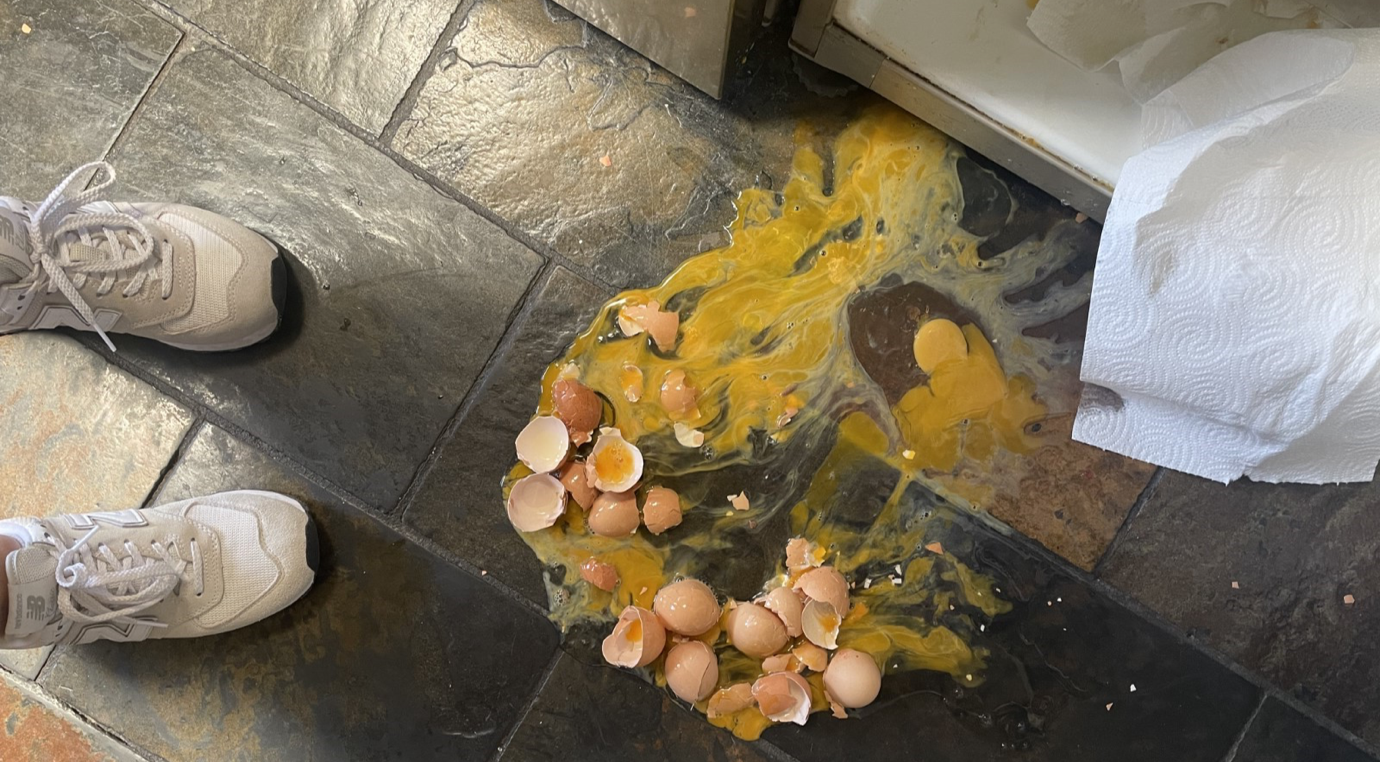
As the eggs slid under the fridge, I became frustrated with the fact that one the thing that once brought me joy, and had served as stress relief, had now had the opposite effect. I was tired, frustrated and burnt out. There was no magic, no calm. As the pressure to meet unattainable standards intensified, each baking task began to feel overwhelming, shrouded in a sense of chaos and impossibility.
I became obsessed with what I did, and not in a healthy way. I was comparing everything I was doing to other people on social media, and how incredible their things looked, and how mine didn't look like that, thinking that my products weren't good enough. I started questioning my own self-worth, thinking, ‘I'm not good enough at this’. I just thought to myself, I can't do this anymore. It's not good for me. It's not healthy, and it's not having the effect that I want it to have.
The song ‘Shake it Out’ by Florence + the Machine really resonated with me throughout this period. The relentless pursuit of flawlessness felt like a dance with a darker force, pulling my thoughts into an anxious spiral of insecurity- ‘it’s hard to dance with the devil on your back’. Despite my earnest search for fulfillment and meaning, I found that 'looking for heaven' in pursuing passion only led me to confront the 'devil in me'. The pressure to meet unrealistic standards left me feeling trapped, caught between the desire to excel and the fear of falling short.
I’ve never considered myself a ‘quitter’, and the people pleaser within me dreaded the thought of saying ‘no,’ of hitting pause on something that made me a ‘hustler,’ but what came organically was the awareness that the lines don’t need to be blurred between work and play. Recognising the toll perfectionism was taking on my well-being, I made the arduous choice to relegate baking to a leisure activity, reclaiming its essence as a source of joy and self-expression. In embracing my imperfections and accepting that I am human, flawed yet worthy, I discovered the strength to shake off the shackles of perfectionism and dance to the rhythm of my own truth. “It’s always darkest before the dawn” (Welch, 2011).
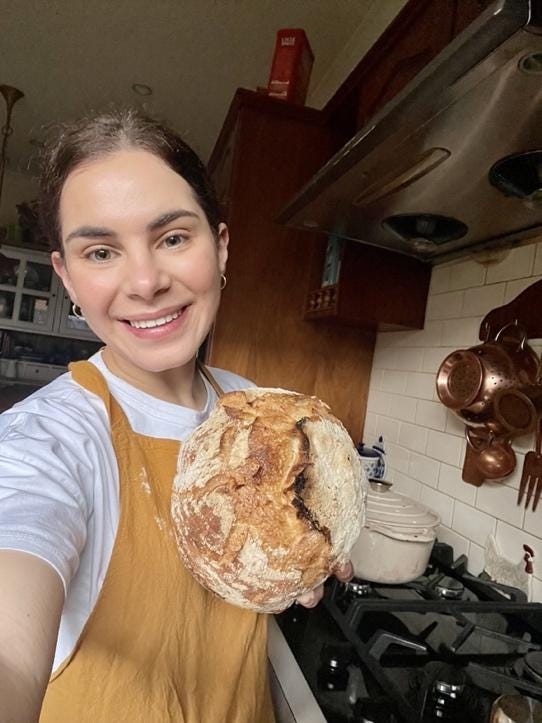
It is perfectly acceptable to engage in activities that you love, for just that- for the love of doing it. With each swirl of batter and delicate decoration, I find peace in the rhythmic movements of baking, a reminder that happiness can be found in the simplest of pleasures. I scour cookbooks and the internet for inspiration to try new things, rekindling the excitement and anticipation that drives me to bake. Not everything I bake is perfect, but it’s not meant to be. Removing the pressure of creating for others has allowed me to reconnect with what I love to do- with the pure happiness and joy that the process brings, to develop skills and test the mind. Baking will always be something that makes me, ‘me.’ It is a kind of medicine, a well-dosed form of self-care, grounding me to the present, connecting me to my ancestors and bringing a tummy-full of joy to my family and friends.
A metaphor for practice

Similar to eggs, we, as individuals, possess inherent fragility. Just as cracks can blemish our surface, sometimes without penetrating our shell entirely, repeated cracks render us increasingly delicate. Clients may approach us already fractured, whether physically or mentally, and conventionally, this state of being "broken" is viewed negatively. However, one cannot embark on the journey of creation without encountering some disruption. Just as breaking eggs is essential for baking a cake, recognising the cracks on our surface as avenues for growth is crucial. These imperfections serve as opportunities to cultivate beauty from adversity, allowing light to permeate through the crevices and illuminate new possibilities.
Through embracing our ‘cracks’ we discover the resilience that lies within us. Through the simple act of baking, I’ve learned that perfection is not the goal; rather, it’s the journey of self-discovery and self-acceptance that really matters. Through navigating the complexities of life, we realise that are imperfections are what make us perfectly human. Just like the cracks in the shell of an egg or on the surface of a cake, it’s through our vulnerabilities that the light shines brightest, illuminating the path to growth, connection, and ultimately, to a deeper sense of fulfillment.
So, savour the sweetness of each moment, embrace imperfections and bake life with love, courage, and grace.
References:
Brown, B. (2017). Braving the Wilderness. Vermilion.
Brown, B. (2010). Gifts of imperfection, the: Hazelden Information & Educational Services.
Reilly, M. (1962). Occupational therapy can be one of the great ideas of 20th century medicine. AM J Occup Ther, 16, 1-9.
Welch, F., Epworth, P. (2011). Shake it Off [Song]. On Ceremonials. Island Records.
Acknowledgements
Victoria wrote this essay while she was doing the masters program in occupational therapy.