
The First Steps
By Josh Del Checcolo

When I think about emotional regulation, the last thing that I ever anticipated to help was running. My first breakthrough came when I decided to run, not for fitness, but with the intention of clarity. I needed to calm my thoughts, clear my mind, and relieve some of the pressures from life and university. That run became the iconic “penny-drop moment”, as I realised empowering running is for my emotional well-being.
Running and I have a long and complicated history, but as a sporty kid, it was an integral part of my life. The journey has been riddled with self-doubt, physical fatigue and constant disconnects. Though back then, there was no life struggles or pressures, so running was just that, running. A boring and difficult task which I hated, outside of playing a sport. Although as I grew older and life’s pressures with it, I would’ve never linked it back to becoming a motivator. Motivators depicted through the lily pads on ‘the river’, supporting and enabling me to move forward even when everything seemed uncertain.
However, in the beginning of this journey, I was at my unhealthiest both physically and mentally. I was the heaviest I had ever weighed, while stuck in cycles of anxiety and depressive states. The first few runs I did were difficult, a chore I forced myself to do, with the only purpose being improving my physical health and appearance. But something quickly changed.
Through determination, I persisted and without realising, running began shaping my identity. A couple of visual images, like Jitka Petrášová’s (Ježková, 2024) painting “Runners” or “Billy Mills crossing finish line” (Wikimedia, 2024) captures athletes in those final agonising moments before crossing the finish line. Their faces telling a powerful story of physical exhaustion, mental struggle and emotional resilience. I see myself in these images.
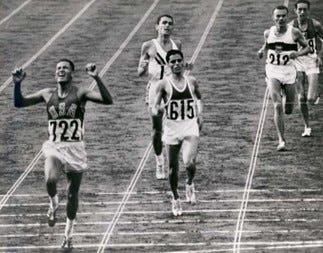
Billy Mills crossing finish line, 1964 Olympics
Those first runs were the hardest. Physical and mental battles, fighting my body and mind to stop. Like the runners, I just was trying to finish. But for the first time, I was confronting myself. My persistence and resilience are what redefined running for me. It is in these moments through perseverance and reflection where I began to deeply understand this activity was changing who I am.
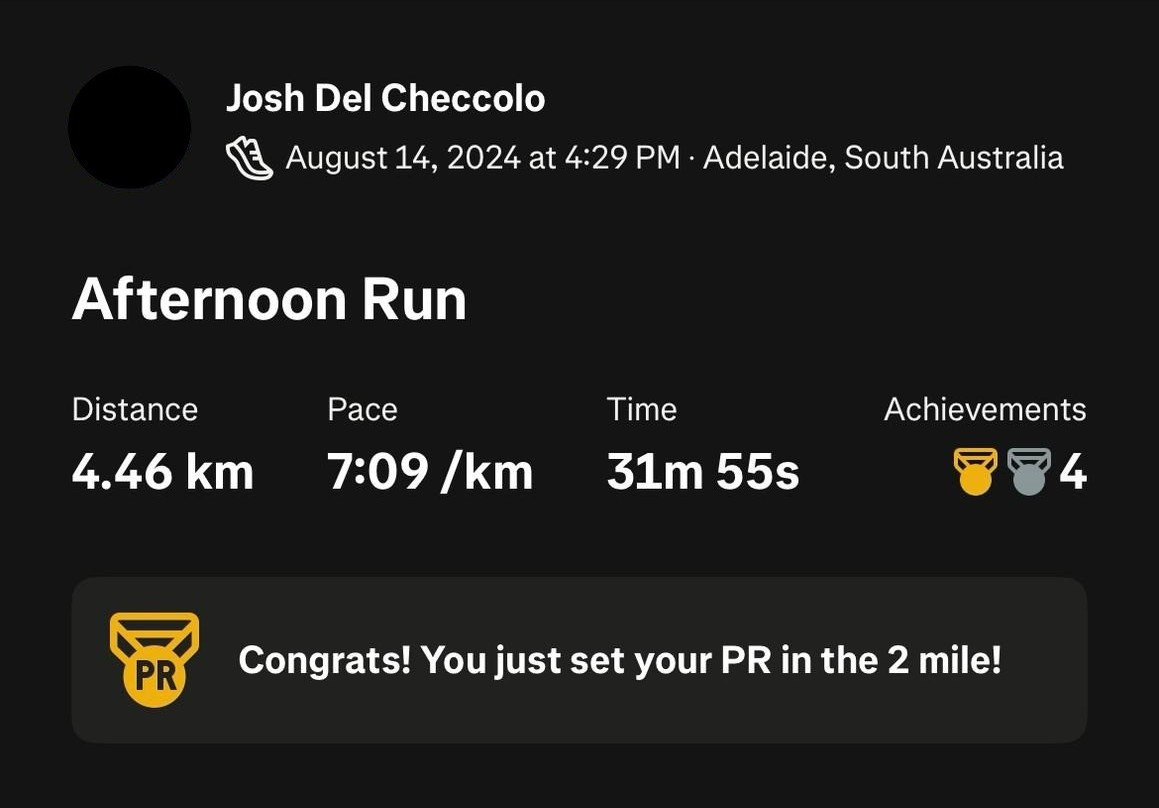
My first recorded run on August 14, 2024.
Becoming a Runner
Initially I would have never called myself a “runner”. That title felt foreign. I naively associated the title with athletes and use to scoff at identifying with it. However, through persistence, I began to see that being a runner wasn’t about performance, it was about turning up.
One foot in front of the other became more than a physical act. It reflected on determination, emotional regulation and identity development. Priebe et al. (2020) describes how identity is not performance driven; it is shaped by personal meaning. Damrongthai et al. (2021) supports this view, explaining running benefits both cognition and moods. My journey mirrors that. What began as a tool to regain my health quickly evolved into something significantly personal.
Running has become a ritual I lean on. Offering clarity, stability and a reset when life becomes overwhelming. It has outgrown its original purpose and has begun redefining how I see myself. A form of therapeutic engagement, enabling me to feel more grounded and confident.
The Science Within the Stride
When I began to break down running, I came to realise how layered and complex it is. It’s a powerful site for identity construction, and I now see running is not just about the individual, it is about the interactions between the person, environment and the occupation itself (Law et al., 1996; Bass et al., 2024).
Running activates a range of mental functions, involving goal setting, planning, emotional regulation and intrinsic motivation (Blacket et al., 2024). Setting small but achievable goals kept me motivated early and led the sprint into the start of my emotional development. According to Höchli et al. (2018), realistic goals enhance persistence and performance. Wack et al. (2014) similarly found goal setting in runners is directly linked to improved health and emotional well-being. Both findings reflect my experience. Each goal I hit, not just improved my fitness but built perseverance and discipline, values that are now imbedded into who I am.
Running also shaped my internal narrative. Blacket et al. (2024) explains, intrinsic motivation and self-efficacy in physical activity are key in constructing personal meanings. Each run I complete reinforces positive self-image and growth. It’s not just an activity for me, but a mechanism for self-expression and a deeper understanding of my identity (Terrell et al., 2021).
Environments also play a pivotal role in my development, as different environments invoke different emotions. Running on the esplanade by the ocean, surrounded by the fresh ocean air, open spaces and the sound of waves, I find, brings me emotional clarity and calmness. However, when I run on my local bike track, I’m surrounded by the hustle and bustle of the city life and traffic, which can shift my mind and attention in an instant. These settings directly impact my mood, performance and well-being (Turecek et al., 2024). The environment isn’t just a backdrop, but a building block of resilience, as each situation and time I choose to run, despite the conditions, reinforces my identity of someone who can push and overcome challenges.
Overtime, running has become a stabilising force during chaotic periods for me. When life feels overwhelming, it provides structure and clarity. When I’m in that flow state, I lose track of time and my thoughts silence. That is when I feel most aligned with myself (Antonini Philippe et al., 2022). In these moments, running becomes an expressive act and reminder of who I am, who I’m becoming and how much I have developed.
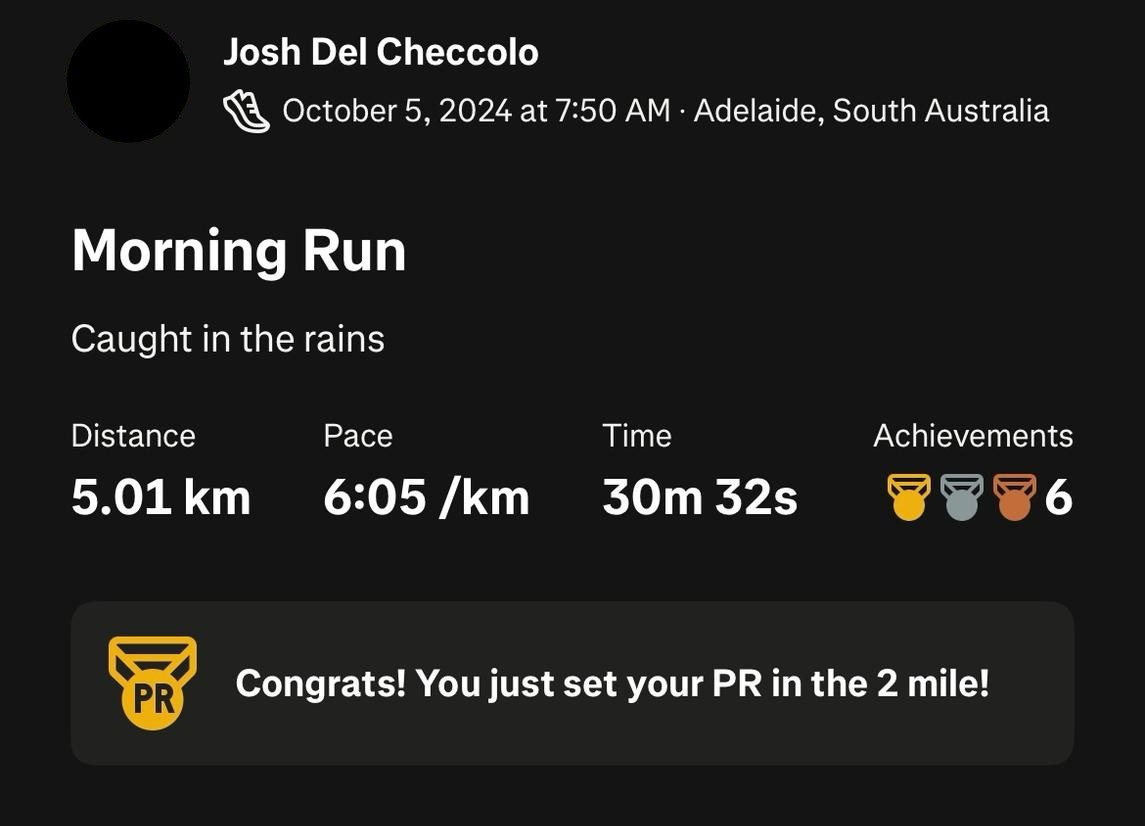
Running progression on October 5, 2024.
Running Collectively
Running has deepened my social connections in ways I never would have anticipated. What started as a personal journey, has grown into a shared physical and emotional space, through a running group my friends and I created. The group has become an important aspect of my journey and my life. It has played a significant role in my weekly structure, my internal motivations and emotional supports. This has been essential to my identity growth and overall physical and mental health and well-being.
Social environments enrich the meaning of occupation (AOTA, 2020), and running groups enhance the self-efficacy and strengthens the identities for those involved (Plateau et al., 2022). This resonates deeply for me, as within the group we all hold each other accountable, offer encouragement and create shared meanings through the occupation. We often also discuss and reflect on what running means to us individually and as a collective. We discuss our personal reliance and accountability to each other, ensuring we motivate one another to continue even when it’s a difficult run. This shared space is what unites people from diverse backgrounds with similar intentions. Despite differences, we reflect on the same growths of mental clarity, emotional strengths and improved outlooks on life, fostering a sense of community and belonging (Martín-Rodríguez et al., 2024). This has also spilled into other aspects of my life too. I’ve found it not only has helped me with social connections, but it has helped improve work-life balance as I now feel more energised, making me want to do more throughout my days. Additionally, and most importantly, it has improved my study habits, as I now am more committed to studies more than I had ever been prior.
This collective experience aligns with Wilcocks (1999) theory of “doing, being, becoming and belonging”, where individuals grow and connect not only through the act itself, but through a sense of connectedness to others who engage in similar occupations (Hitch et al., 2014).
Through these shared runs, I now understand that occupation isn’t just something we do as individuals but something that can empower us to develop when done alongside others.
Running Mirrors Me
Reflecting on my journey, I can see how much running has transformed me. How it initially began as a tool for fitness, but how it has become a vital part of my emotional regulation, identity and self-discovery. To answer my guiding question: How can movement practices like running become spaces for emotional and personal growth, and shape who we become? My lived experience poses a clear answer: Not every run is easy, and many I go on are deeply challenging. But they permit me to be in motion, not only physically but emotionally. I know it’s not about how fast or far I run, it’s about my mindset being one of persistence and self-belief.
Running has allowed me to confront myself in ways which I had never done before. It made me confront the uncomfortable internal battles head on, making me accountable for my actions against myself. In an interview conducted by our class with J., an individual with disability, he openly shared his journey with disability and his internal struggles and how he overcomes those through reflection, honesty and determination. Despite our different backgrounds and life experiences, I deeply connected to his words. We share a drive that says we are not defined by our challenges. Through reflection and determination, we face them with resilience and self-awareness. Through each step I take, it becomes an enabler to develop into the person I want to be. Identity is not static, it’s forever in motion through repetition, accountability and most importantly, personal reflections (Dishon et al., 2017).
During a run, I often reflect. I process my week and often my worries fall away until there is only silence. These quiet moments have become a form of emotional hygiene, as they often leave me more grounded and focused than I initially was. I find that once I finish, I become more determined and prepared for what lies ahead. It’s in these spaces, where I find I’m my most authentic self.
Running has also enabled me to recognise the therapeutic value of the occupation. When pressures of university or life become too much, I know I’m just one run away from mental clarity, enabling me to tackle life’s challenges head on. What began as a health intervention, has now grown into a way of life, a source of identity and emotional grounding.
I also remember that this insight didn’t surface overnight. Running taught me that discomfort often precedes growth. That progress is not an easy thing to achieve. It is not always at the finish line where you find growth, but in the invisible internal battles along the way. They are what shaped me. Choosing to keep going, even when it was hard and much easier to stop, has shaped not only my running identity, but the person that I am today.
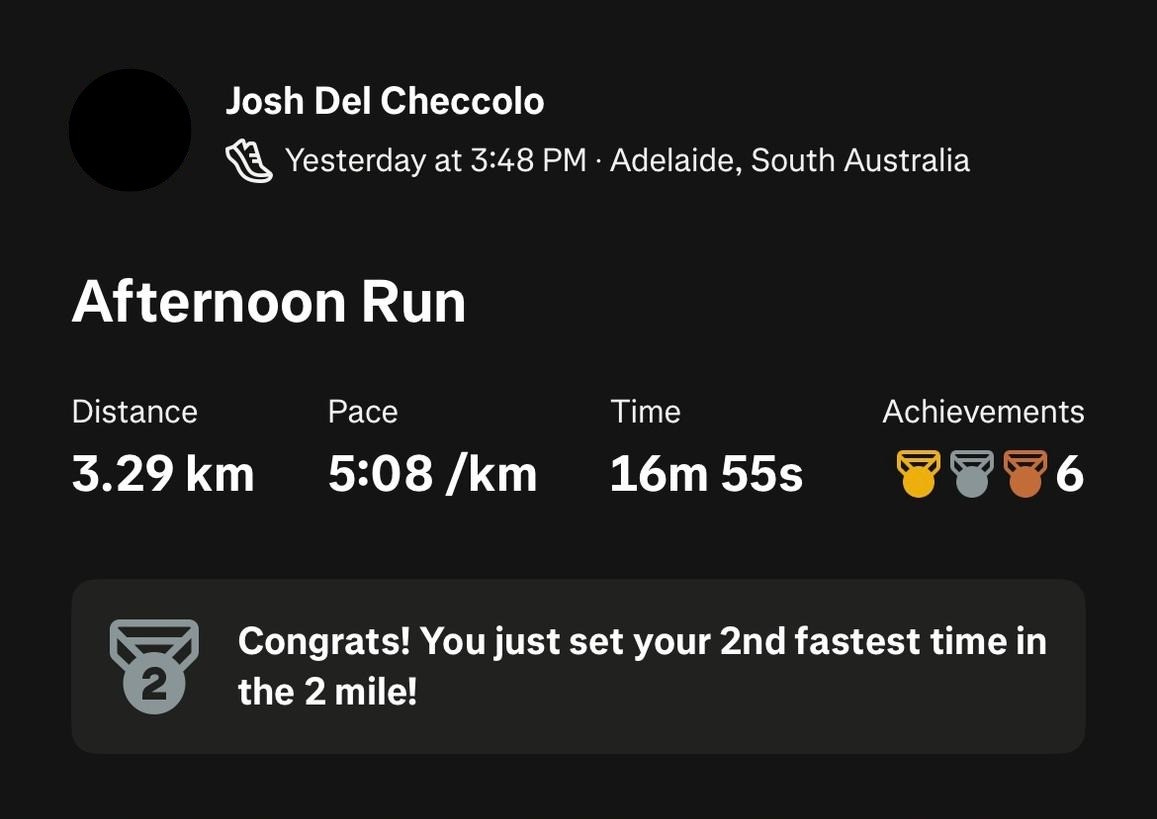
Present day progression on April 6, 2025.
The Finish Line
If I were to summaries this journey, it would be through the metaphor of becoming a frog. Just as tadpole begins its life fragile, uncertain and without form, I too begun my journey of running in the same environment, unsure of who I really was or what I was capable of. I began this journey with little insight, unaware of my future. The initial sole purpose to improve physical health, oblivious to the emotional and psychological transformation it would inspire. Overtime through reflections, discipline, resilience and a stronger sense of self, I began to develop. That development captured in the transition to the frog. It symbolises a new identity, strength and readiness to leap forward no matter the challenge. Running hasn’t only reshaped my physical self, but also the way I approach life, equipping me with tools to navigate challenges, regulate emotions and strive to become a better me. This metaphor reminds me that growth isn’t linear, and that at each stage no matter how uncertain, holds growth and significance. As I continue to “leap” into the unknown of the future, I carry the understanding of my identity is in constant motion, not shaped by where we end up but by the journey along the way.
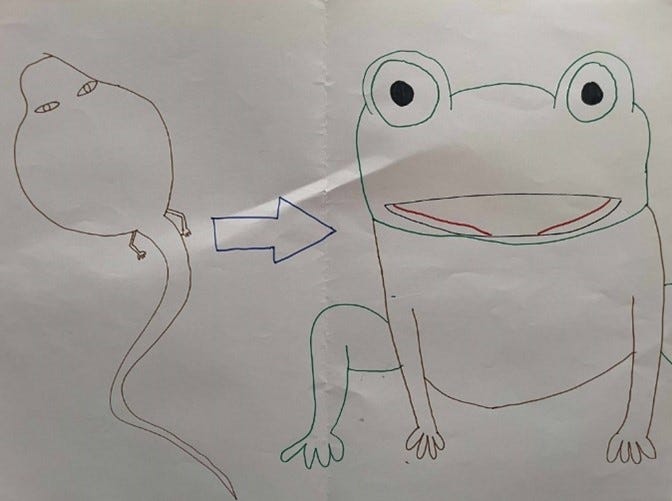
This also guides me on how I would like to be perceived and how I want to practice as an occupational therapist. I do not want to view my future clients as broken and in need of being fixed. I want to see them as capable people, moving through their own internal environments, carving their own journeys, carrying both struggle and strengths. My role will be to walk beside them, to create safe spaces which allow them to reconnect with themselves and the occupations that give their lives meaning and purpose. Just as running helped me reclaim a part of myself, I want to be able to support others to occupations which are meaningful, stabilising and self-affirming. Whether it is through shared passions or the perseverance of a difficult journey, occupation, when engaged with intention, is where identity is expressed and formed.
Reference List
American Occupational Therapy Association [AOTA]. (2020). Occupational Therapy Practice Framework: Domain and Process—Fourth Edition. The American Journal of Occupational Therapy, 74(Supplement_2), 7412410010p7412410011-7412410010p7412410087. https://doi.org/10.5014/ajot.2020.74S2001
Antonini Philippe, R., Singer, S. M., Jaeger, J. E. E., Biasutti, M., & Sinnett, S. (2022). Achieving Flow: An Exploratory Investigation of Elite College Athletes and Musicians. Frontiers in Psychology, 13(1), 1–11. https://doi.org/10.3389/fpsyg.2022.831508
Bass, J. D., Marchant, J. K., de Sam Lazaro, S. L., & Baum, C. M. (2024). Application of the person–environment–occupation–performance model: A scoping review. OTJR: Occupational Therapy Journal of Research, 44(3), 521–540. https://doi.org/10.1177/15394492241238951
Blacket, C. T., Fuller, J. T., Bennett, H., Crozier, A. J., Dziano, J. K., & Arnold, J. B. (2024). Just Run: Development of a theory-based motivational online intervention for promoting ongoing running participation. Psychology of Sport and Exercise, 71(1), 1–10. https://doi.org/10.1016/j.psychsport.2023.102581
Damrongthai, C., Kuwamizu, R., Suwabe, K., Ochi, G., Yamazaki, Y., Fukuie, T., Adachi, K., Yassa, M. A., Churdchomjan, W., & Soya, H. (2021). Benefit of human moderate running boosting mood and executive function coinciding with bilateral prefrontal activation. Scientific Reports, 11(1), 1–12. https://doi.org/10.1038/s41598-021-01654-z
Dishon, N., Oldmeadow, J. A., Critchley, C., & Kaufman, J. (2017). The Effect of Trait Self-Awareness, Self-Reflection, and Perceptions of Choice Meaningfulness on Indicators of Social Identity within a Decision-Making Context. Frontiers in Psychology, 8(1), 1–11. https://doi.org/10.3389/fpsyg.2017.02034
Hitch, D., Pépin, G., & Stagnitti, K. (2014). In the Footsteps of Wilcock, Part One: the Evolution of Doing, Being, Becoming, and Belonging. Occupational Therapy in Health Care, 28(3), 231–246. https://doi.org/10.3109/07380577.2014.898114
Höchli, B., Brügger, A., & Messner, C. (2018). How Focusing on Superordinate Goals Motivates Broad, Long-Term Goal Pursuit: A Theoretical Perspective. Frontiers in Psychology, 9(1), 1–14. https://doi.org/10.3389/fpsyg.2018.01879
Ježková, S. (2024, August 20). Running in Contemporary World Painting: Depicting Movement on Canvas. Sport in Art. https://www.sportin.art/en/article-detail/running-in-contemporary-world-painting-depicting-movement-on-canvas
Law, M., Cooper, B., Strong, S., Stewart, D., Rigby, P., & Letts, L. (1996). The person-environment-occupation model: A transactive approach to occupational performance. Canadian Journal of Occupational Therapy, 63(1), 9–23. https://doi.org/10.1177/000841749606300103
Petrášová, J. (2022). Runners [Painting]. Sport in Art. https://www.sportin.art/en/article-detail/running-in-contemporary-world-painting-depicting-movement-on-canvas.
Plateau, C. R., Anthony, J., Clemes, S. A., & Stevinson, C. D. (2022). Prospective study of beginner running groups: psychological predictors and outcomes of participation. Behavioral Medicine, 50(1), 1–8. https://doi.org/10.1080/08964289.2022.2100865
Priebe, C. S., Beauchamp, M., Wunderlich, K., & Faulkner, G. (2020). “I’m a runner not a smoker”: Changes in identity as predictors of smoking cessation and physical activity. Psychology of Sport and Exercise, 49(1), 101702. https://doi.org/10.1016/j.psychsport.2020.101702
Turecek, S., Brymer, E., & Shahin Rahimi-Golkhandan. (2024). The Relationship Between Physical Activity Environment, Mental Wellbeing, Flourishing and Thriving: A Mixed Method Study. Psychology of Sport and Exercise, 76(1), 1–14. https://doi.org/10.1016/j.psychsport.2024.102769
Wack, S. R., Crosland, K. A., & Miltenberger, R. G. (2014). Using goal setting and feedback to increase weekly running distance. Journal of Applied Behavior Analysis, 47(1), 181–185. https://doi.org/10.1002/jaba.108
United States Marine Corps. (1964). Billy Mills crossing finish line, 1964 Olympics Wikimedia Commons. https://commons.wikimedia.org/wiki/File:BillyMills_Crossing_Finish_Line_1964Olympics.jpg As a work of the U.S. federal government, the image is in the public domain.”
Wilcock, A. A. (1999). Reflections on Doing, Being and Becoming. Australian Occupational Therapy Journal, 46(1), 1–11. https://doi.org/10.1046/j.1440-1630.1999.00174.x
Primary Sources:
Del Checcolo, J. (2025). Peer Interview with a friend about Running and identity [Unpublished interview].
Del Checcolo. J. (2025). Peer Interview with J, individual with lived experience of disability [Unpublishes interview]
Acknowledgements: This essay was written when Josh was an OT student at UniSA
